Introduction
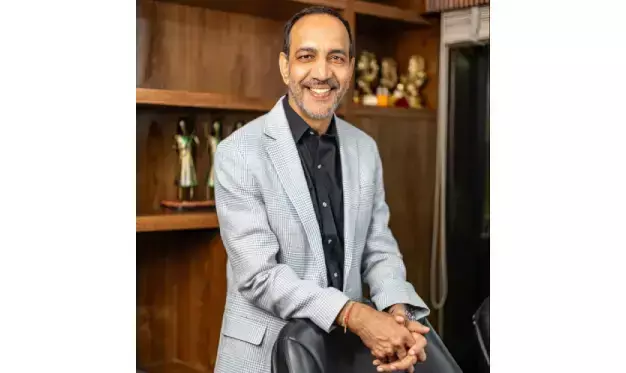
Attributed to Kailash Anwala, Founder & Managing Director, UniSteps Consulting Pvt. Ltd. https://www.thehansindia.com/tech/why-india-needs-modern-homegrown-erp-solutions-1078127
India’s real estate sector is expanding rapidly across residential, commercial, and mixed use developments. Development today is being undertaken on a much larger scale with multiple participants involved, complex layering of finance and extended delivery periods. ERP platforms are beginning to play a critical role in this context. https://www.thehansindia.com/tech/why-india-needs-modern-homegrown-erp-solutions-1078127
Fundamentally, ERP introduces finance, sales, procurement and project management as a single data system. It enhances visibility, coordination and operational discipline throughout projects. https://www.thehansindia.com/tech/why-india-needs-modern-homegrown-erp-solutions-1078127
This is easier said than done, and not the real test for India. The challenge for India is not the adoption of ERP but the execution of this concept. https://www.thehansindia.com/tech/why-india-needs-modern-homegrown-erp-solutions-1078127
A lot of organizations have already invested in ERP systems. They are in use, working, and being reported on. And the coordination of projects on a daily basis still is at a poor level. The hole is between the design of ERP systems and the reality of work on the shop floor. https://www.thehansindia.com/tech/why-india-needs-modern-homegrown-erp-solutions-1078127
For the majority of organizations, execution continues to happen on email, WhatsApp, spread sheets and manual follow,ups. Drawings are passed on chat. Approvals rest in inboxes. Important decisions are made in dialogue not recorded in formalized formats. https://www.thehansindia.com/tech/why-india-needs-modern-homegrown-erp-solutions-1078127
This creates risk. https://www.thehansindia.com/tech/why-india-needs-modern-homegrown-erp-solutions-1078127
ERP systems in India have tended in the main to be in finance, inventory and compliance related areas. While we need these, these are not where the biggest inefficiencies are. Sometimes delays do not occur because the accounting was wrong but because a drawing missed its recipient, an approval was not given or accountability between teams was unclear so people have to re,do work. https://www.thehansindia.com/tech/why-india-needs-modern-homegrown-erp-solutions-1078127
As a result, organizations end up running two parallel systems. One formal system for reporting and approvals, and another informal system that actually drives execution. https://www.thehansindia.com/tech/why-india-needs-modern-homegrown-erp-solutions-1078127
The complexity increases in the Indian context. Projects involve consultants, contractors, vendors, and financial partners working simultaneously. Teams are distributed. Decision-making is dynamic. Workforce movement is frequent and often unstructured. https://www.thehansindia.com/tech/why-india-needs-modern-homegrown-erp-solutions-1078127
Global ERP systems are built for more stable environments. When applied here without adaptation, they remain underutilized, while informal systems continue to dominate execution. https://www.thehansindia.com/tech/why-india-needs-modern-homegrown-erp-solutions-1078127
This is where the need for modern, homegrown ERP solutions becomes clear. https://www.thehansindia.com/tech/why-india-needs-modern-homegrown-erp-solutions-1078127
India needs systems built around how work actually happens on-site. Not systems that only record transactions after the fact. https://www.thehansindia.com/tech/why-india-needs-modern-homegrown-erp-solutions-1078127
Daily communication, including chats, task tracking across office and site teams, approvals, meeting records, documentation, and complete workflows must exist within a single structured system. From drawings and manpower tracking to quality checks, test records, billing, and final closure, everything needs to be connected. https://www.thehansindia.com/tech/why-india-needs-modern-homegrown-erp-solutions-1078127
More importantly, these workflows must be interconnected. Each step should naturally lead to the next, reducing dependency on individuals and minimizing missed actions. https://www.thehansindia.com/tech/why-india-needs-modern-homegrown-erp-solutions-1078127
Data is another major challenge. Nearly 80 percent of enterprise data today is unstructured, including emails, chats, and shared documents. For ERP to be effective, this unstructured layer needs to be brought into a governed system where conversations convert into trackable actions, decisions are recorded, and information is not lost with people. https://www.thehansindia.com/tech/why-india-needs-modern-homegrown-erp-solutions-1078127
From a governance standpoint, this also strengthens control. Role-based access, audit trails, and centralized ownership improve accountability. https://www.thehansindia.com/tech/why-india-needs-modern-homegrown-erp-solutions-1078127
There is also a measurable impact. Organizations using centralized ERP systems can reduce data duplication and manual errors by up to 30 to 40 percent. This directly improves efficiency and reduces cost across stakeholders including developers, consultants, contractors, suppliers, and support teams. https://www.thehansindia.com/tech/why-india-needs-modern-homegrown-erp-solutions-1078127
As Indian businesses scale and align with global standards, expectations from ERP are changing. It is no longer just a reporting tool. It is becoming the backbone of execution clarity. https://www.thehansindia.com/tech/why-india-needs-modern-homegrown-erp-solutions-1078127
However, Indian projects operate very differently from global templates. The way coordination happens, the speed of decisions, and the number of stakeholders involved require a different approach. https://www.thehansindia.com/tech/why-india-needs-modern-homegrown-erp-solutions-1078127
The next phase of ERP adoption in India will be driven by relevance. Systems that align with India’s execution-heavy, multi-stakeholder environment will succeed. Generic ERP solutions will have limited impact. https://www.thehansindia.com/tech/why-india-needs-modern-homegrown-erp-solutions-1078127
India does not just need ERP. It needs ERP that understands how India works. https://www.thehansindia.com/tech/why-india-needs-modern-homegrown-erp-solutions-1078127